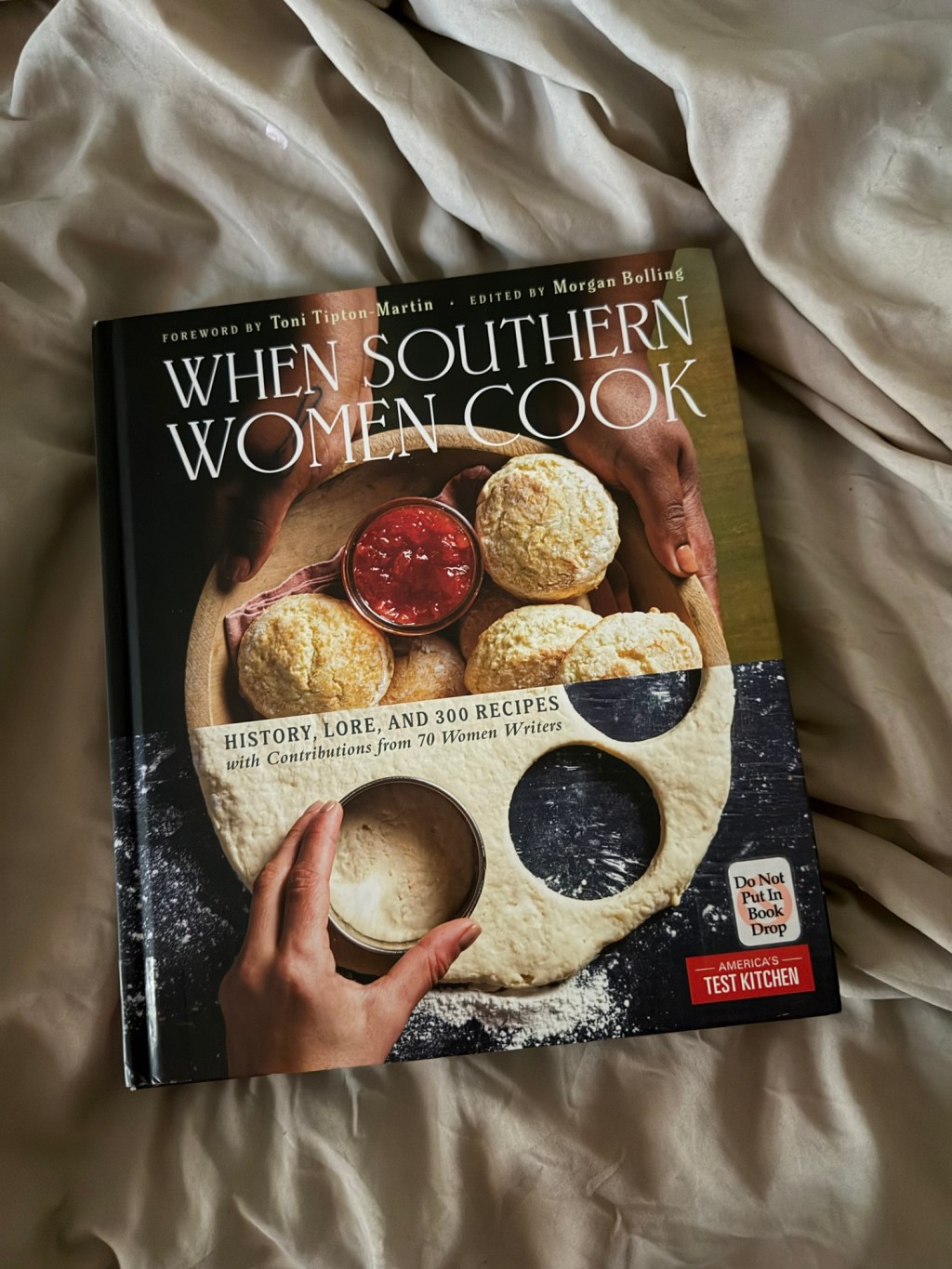
I thoroughly enjoyed this cookbook. It currently sits in my top three favorite cookbooks. For me, it is more than a comprehensive and inclusive cookbook. It made me more aware of my palate and preferences and why I eat the way that I eat. While everyone will have a different experience, mine was enlightening and empowering. Food carries stories about people’s time, place, and identity, and that is what I found in this cookbook.
I actually picked up this book with a little hesitation. Because it doesn’t take much for a person to consider something as Southern. I mean this in the sense of what’s well known culturally and not so authentic. I say that to say I did roll my eyes, hoping this wasn’t in the same vein as a Dolly Parton cookbook. This is not me saying that Dolly Parton isn’t Southern. It’s just that she’s theatrical, and while it is fun to watch theatrics, I don’t want all that in my kitchen. I just want to get down to business. No pink frills, just good food.
I flipped through the pages to see which category I’d fit this book into: good food or theatrics. As I flipped, I noticed that almost every recipe had a history. Whoever put this book together had a lot to say about all the recipes that were in it. From origins to recommendations, this was more than just a guide to Southern cooking. It was a story of the South and the people who made it what it is.
When Southern Women Cook is a collection of cornerstone Southern recipes. It includes a diverse group of women and cultures that define the rich fabric of the American South, its origins, and its cuisine. The co-authors of this book are members of the Southern Foodways Alliance and developed this cookbook in America’s Test Kitchen.
This cookbook primarily took recipes from women and people of color. One of the authors, a founding member of the Southern Foodways Alliance, had expressed a lack of cultural representation within the organization. She didn’t come right out and say it, but I did some digging.
In 2020, the president of the committee was accused of whitewashing the culinary history of the South, and many people did not see themselves represented in the story of Southern cuisine despite their contributions. The committee put out a statement and vowed to do better.
This cookbook was in direct response to that controversy. The authors set out to create a testament to the voices that had been overlooked, and it worked.
I would rank this cookbook as cultural, essential, and conscious.
Cultural:
Cookbooks are usually centered around the person who wrote them. Cooking comes from lived experience, and recipes often reflect one person’s perspective. In this cookbook, while there are two authors, there are many contributors. Each recipe comes from various ethnic and regional groups, and some have direct attributions. This book decentralizes a single author and tells a collective story
Essential:
I have read cookbooks where “essential” means the basics. How to make beans three ways, how to use crushed tomatoes in marinara or over meatloaf. This book is different. It is a starting point to Southern cuisine. It is culturally diverse and thorough in the way it explains what goes into each recipe and why. If you want to begin cooking Southern food, you start here.
Conscious:
This cookbook does go in depth about ethical food consumption. However it asserts the importance of being culturally mindful in regards to food. It does not claim dishes without proper attribution. There are references, histories, and stories to support every recipe. This does not take away from the originators. It adds credibility and visibility to groups that might otherwise go unseen. That is a conscious choice.
There were so many recipes that reminded me of my childhood, my family, and myself. I could see myself in the kitchen or at BBQs where these recipes were made, or waiting in living rooms and church halls to be called to eat. I got excited when I found references to cookbooks I had already read and loved. I was even surprised to learn that the origins of chicken and waffles trace back to Pennsylvania.
And in that way, I think this book served its purpose. Because recipes are never just instructions for how to make food. They come with the knowledge of others, those before and the sides of us. It’s an inheritance.
 light & gather
Leave a comment